

UnEarthed
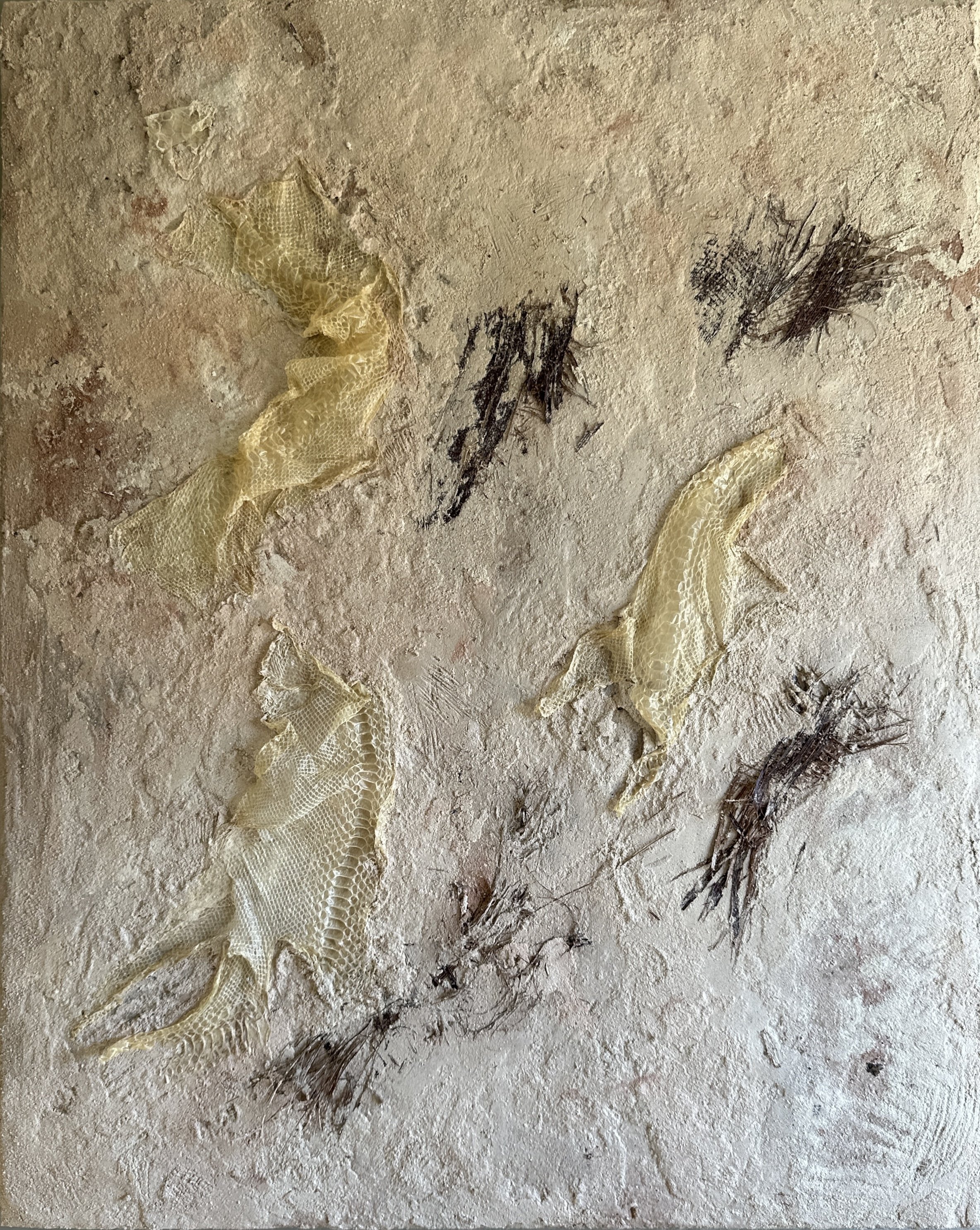
A tidal lagoon in the heart of Oakland, Lake Merritt is the oldest wildlife refuge in the United States. Within its park lies the Palmetum, home to one of the country’s most extensive palm collections. The graceful fronds, red fibers, and clusters of fruit inspire this work. Bone clay tinted with soft pink pigments meets the golden tones of an unknown snake shed and the rich texture of palm fiber. This work, an homage to the quiet beauty found within the city’s landscape.
16” x 20” Unknown snake shed, clay plaster, palm tree fiber, earth pigments on clay board. Handmade bubinga frame.

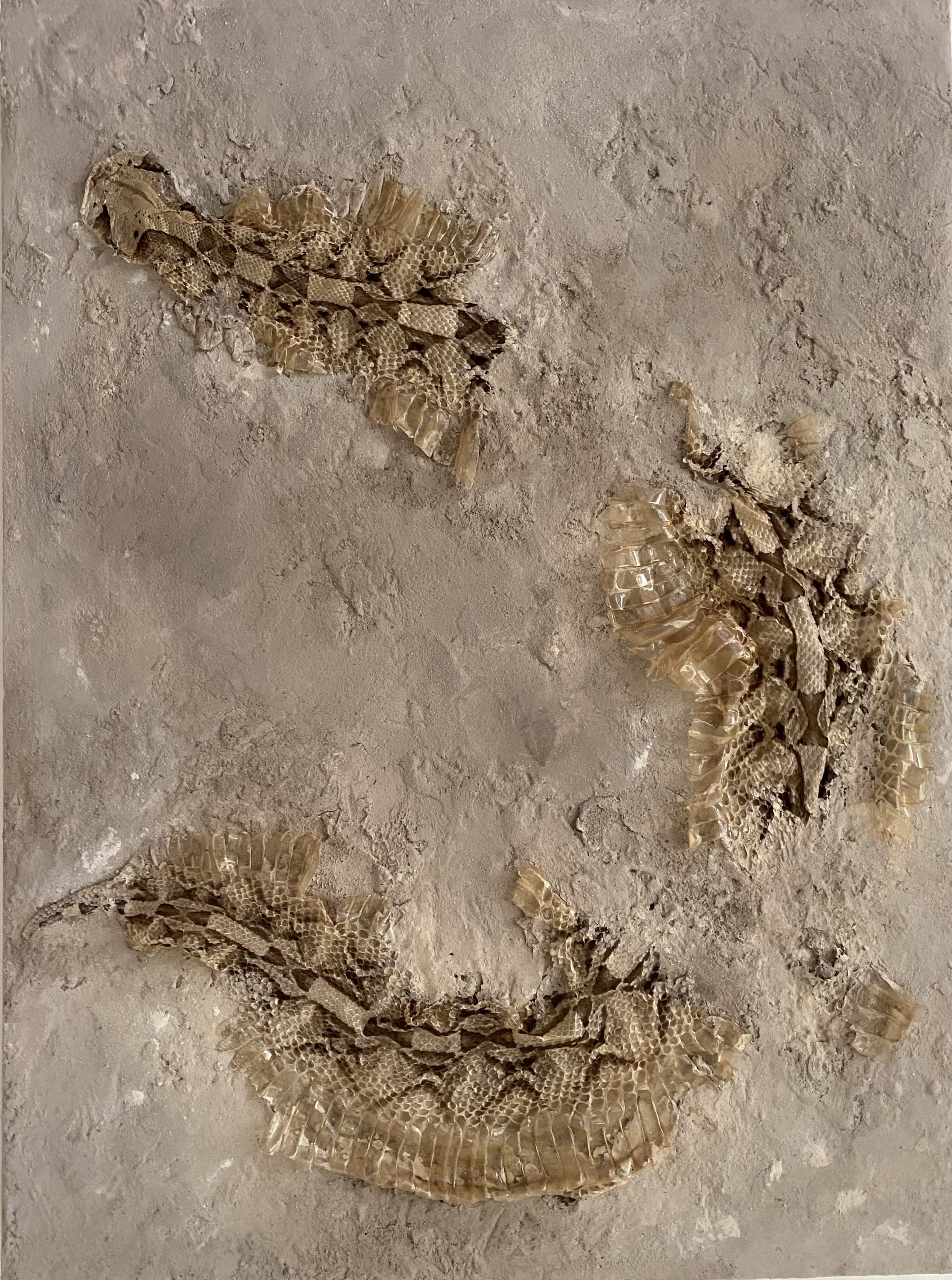
This delicate, tiny Desert Horned Viper left behind the most striking square-patterned shed. Look closely and you’ll see the faint impressions of tiny horns and eyes, an entire being, briefly encapsulated in its own skin. Embedded in sand-colored clay and ochre earth pigments, the piece echoes the creature’s native landscape, the Saharan desert. It feels like a grand, miniature discovery, one you were lucky enough to stumble upon.
16” x 24” Clay plaster, Desert Horned Viper shed, earth pigments and clay board. Handmade red oak frame.
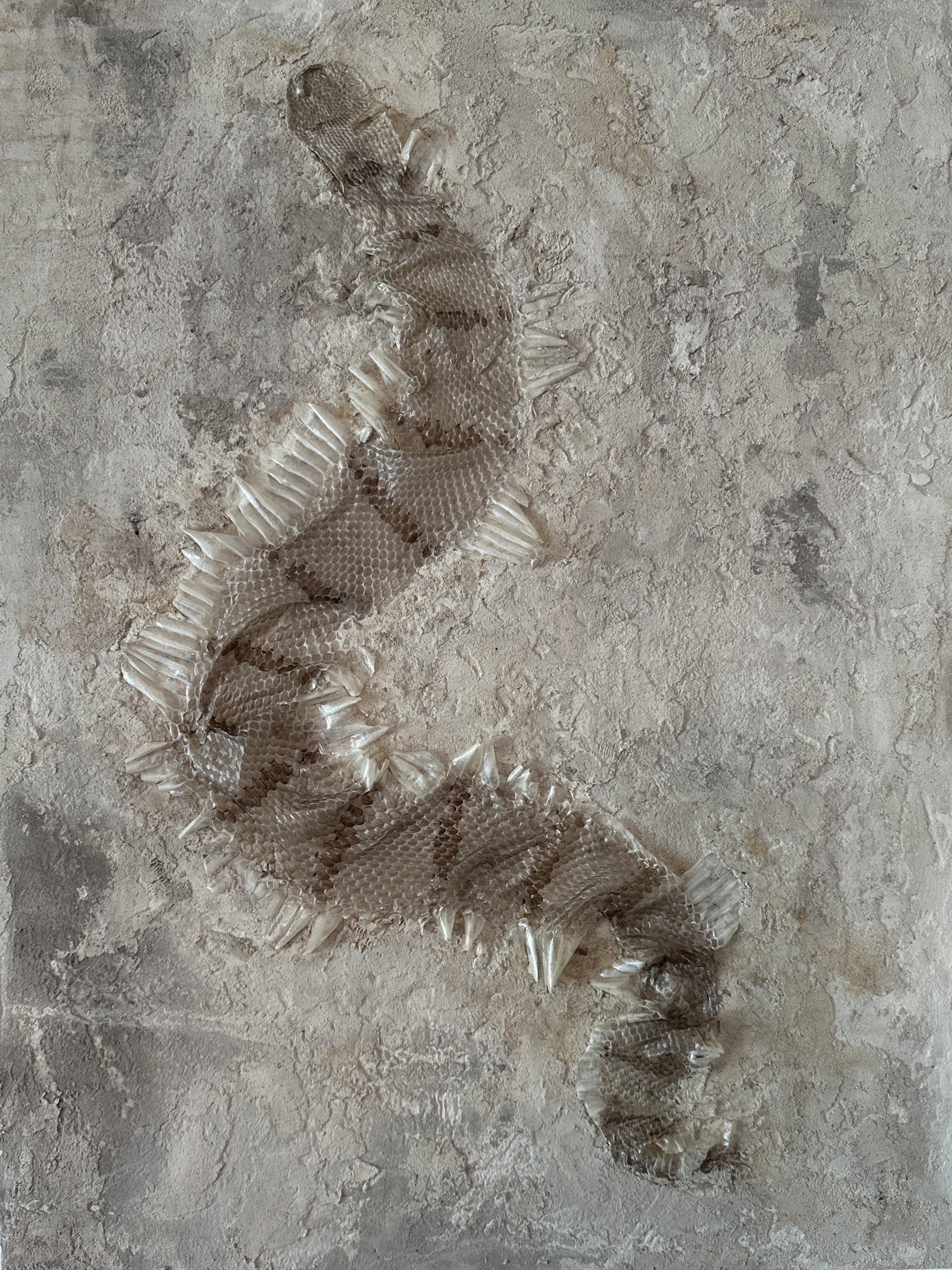
Rich, earthy tones and an intricate hourglass pattern define this extraordinary shed. Native to the rainforests of the French Congo and Central Africa, the Gaboon Viper possesses the longest fangs of any venomous snake. Guided by the spirit, place, and movement of this remarkable creature, the work evokes the stillness of the forest floor where the snake quietly releases its skin. The pattern feels painted by nature’s own hand, a graceful balance of symmetry, wildness, and beauty.
18” x 24” Gaboon Viper snake shed, clay, soil and earth pigment on clay board. Handmade walnut frame.
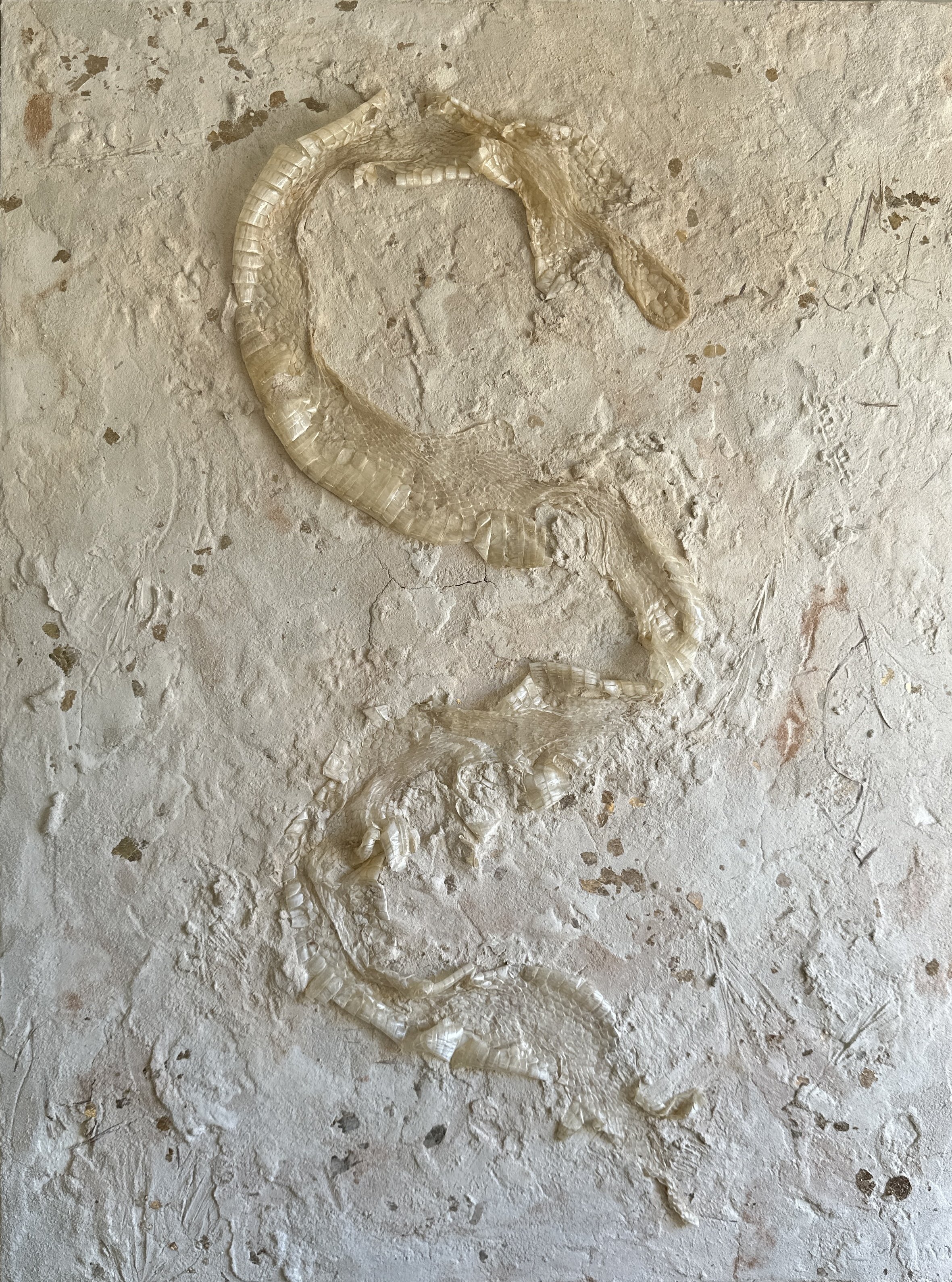
Hidden among the arroyos of Texas, New Mexico, and Arizona, the Banded Rock Rattlesnake is a master of camouflage. This piece mirrors that subtle art of concealment. Formed with clay plaster sourced from the Southwest, the textures evoke the dry gullies and sun-baked stones of desert terrain. Imagine walking through a parched ravine, drawn to something glimmering just beneath the dust. As you approach, the outline of a snake begins to appear, only to reveal itself as a shed, left behind like a ghostly trace. A rare discovery on the desert floor, fleeting yet unforgettable.
18” x 24” Banded Rock Rattlesnake shed, clay plaster, earth pigment on clay board. Handmade walnut frame.
Glowing in gold, copper, and bronze, the shed drifts across a field of pale, shimmering clay. Native to the mangroves and rice fields of China, Vietnam, and Cambodia, the Albino Monocled Cobra carries an ethereal beauty. Its circular hood marking a quiet symbol of grace and power. Fine bone clay, gold mica flakes, and foraged weeping bottle brush leaves.intertwine here, their textures catching light like memory. The golden tones enrich the composition, echoing the natural shimmer of the shed as it traces a graceful, serpentine curve.
18” x 24” Albino Monocled Cobra shed, clay, bronze mica and weeping bottle brush leaves on clay board. Handmade red oak frame.
SOLD
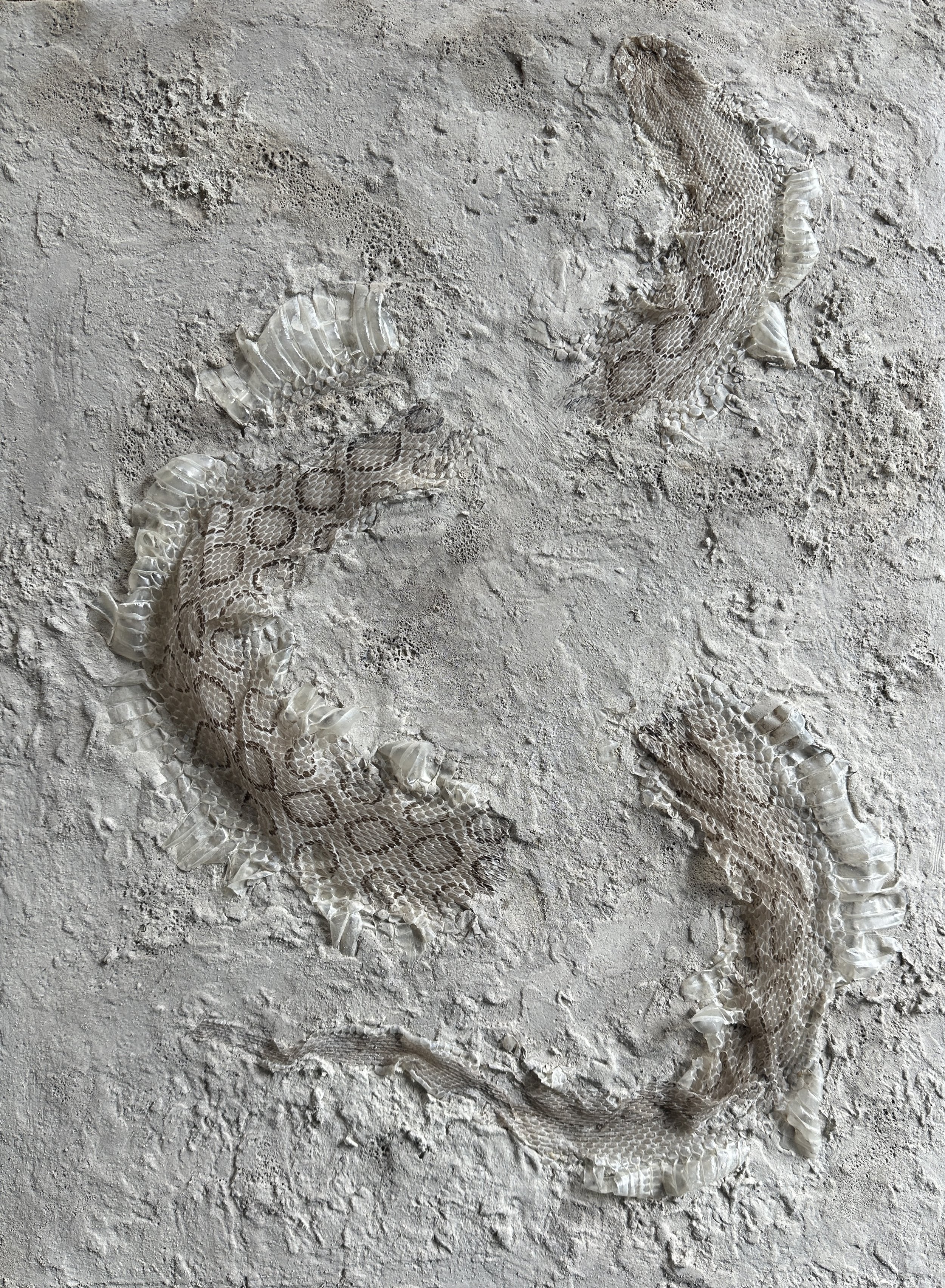
The dark rings on this gray shed mesmerize like ripples caught in still clay. From the highly venomous Russell’s Viper of India and South Asia, this shed lies half-ghosted in a field of two-toned gray clay and ash. Its sinuous pattern pulls the eye inward, beckoning a closer look. An echo of danger and beauty intertwined, nature’s quiet reminder of the power within her design.
18” x 24” Russell’s Viper shed, clay plaster, earth pigments, ash on clay board. Handmade walnut frame.
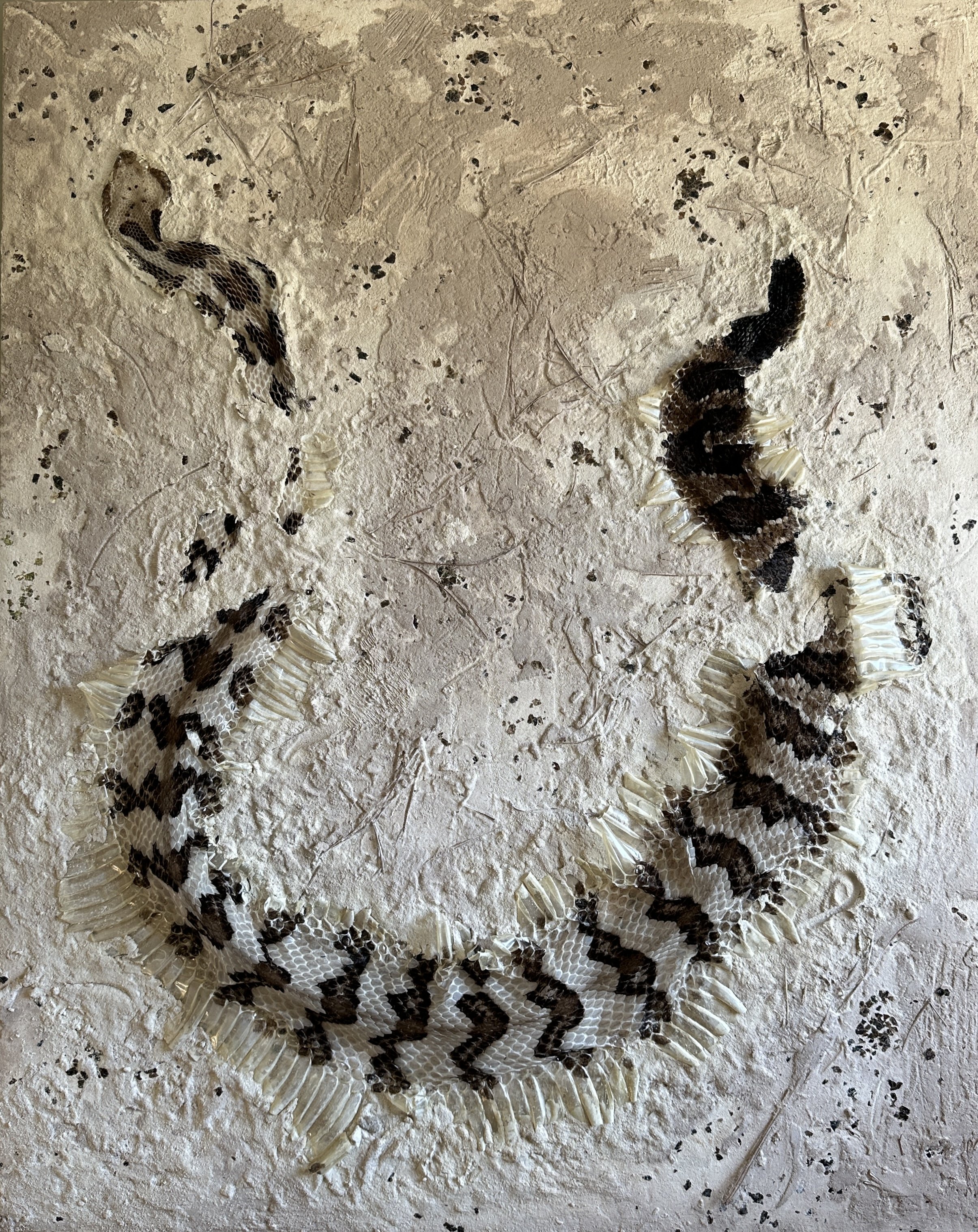
Striking in shades of black, white, and deep brown, this Canebrake Rattlesnake shed carries the quiet power of its namesake. Native to the Eastern United States, the Canebrake dwells among limestone crevices and pine forests, places of stillness and shadow.
This piece reimagines that natural habitat, with layers of clay embedded with foraged pine needles and glimmering mica flakes. The surface catches light like scales in motion, alive with subtle shimmer and texture. Seen in person, the work reveals its depth and complexity, an homage to the delicate balance between strength and beauty found in nature.
24” x 30” Canebrake Rattlesnake shed, clay plaster, pine needles, black mica, natural soil on clay board. Handmade walnut frame.

The first in the Unearthed series. A friend gifted this shed as the journey with clay plaster began. While floating the trowel across a wall, the impulse arose to capture that same shimmer, texture, and movement on a smaller, more intimate surface. The work reveals both sides of the shed, one luminous and expressive, the other soft and subdued. Both reflecting the quiet beauty of transformation.
24” x 30” Clay Plaster, Boa snake shed, earth pigments. Handmade white oak frame.
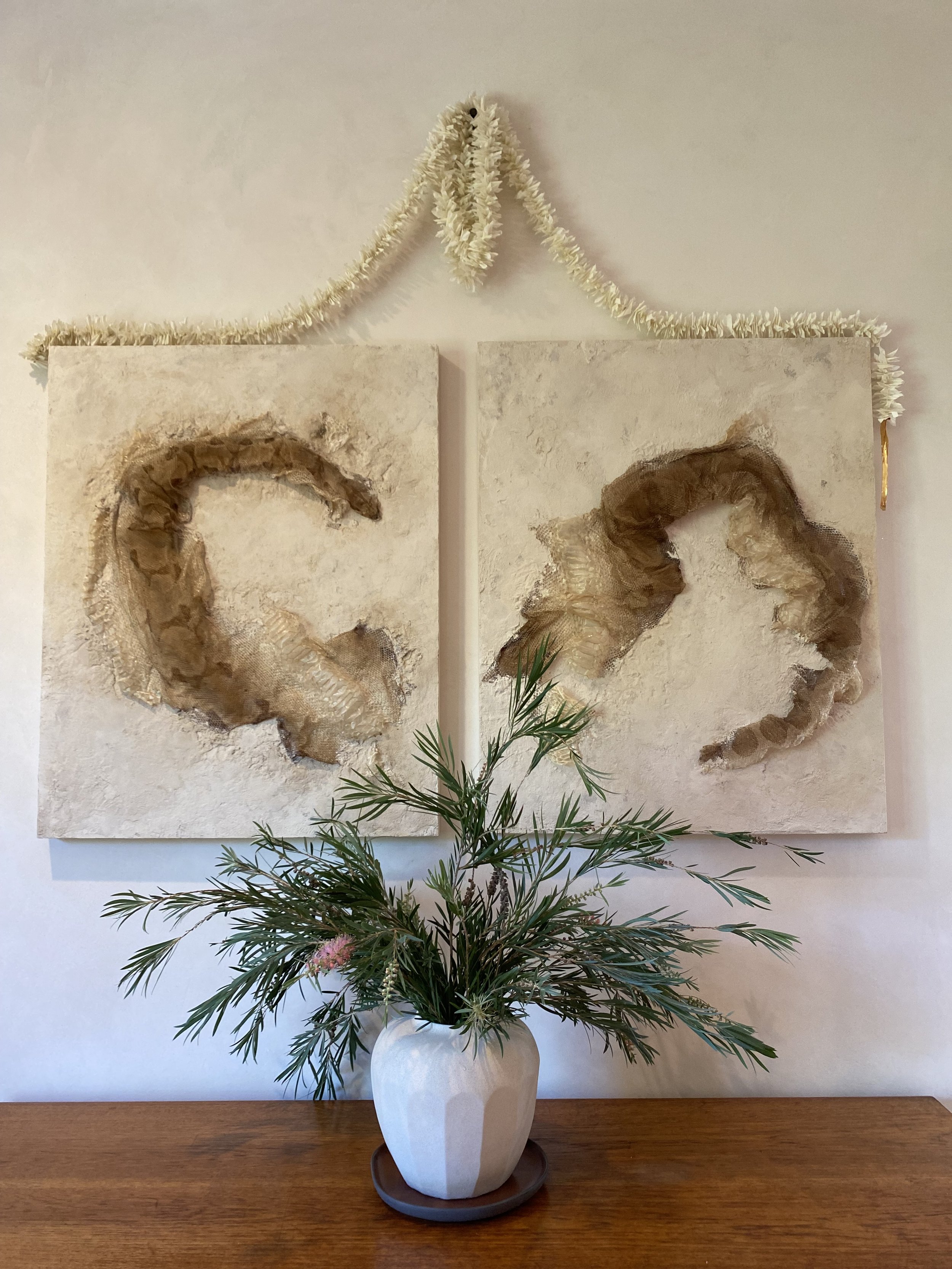
This rare find demanded to be seen and celebrated. Too vast for a single canvas, it became a diptych, a work divided only by necessity, not by spirit. Layers of bone-colored clay and natural earth pigments cradle the serpent’s form, its body buried in soft terrain. The intricate belly scales and back pattern reveal nature’s boundless artistry. The boa’s power and grace woven into design. A true showstopper, this piece is an ode to the infinite beauty of the natural world.
24” x 30” Diptych - Boa Constrictor shed, clay plaster, earth pigments on clay board. Handmade white oak frame.
In Unearthed, natural clay and snake sheds intertwine to reveal what time leaves behind. Sourced from New Mexico, the clay shifts from smooth to coarse, like landscapes shaped by wind and memory. Each pressed shed captures a trace of transformation, an echo of something once alive. These works invite quiet discovery. Allowing us to notice what’s often unseen yet deeply beautiful, unearthed from the passing of time.
Plants
Nature has always been my home. A place where I feel most alive and creative. Immersed in its sounds, scents, and shifting light, I’ve come to revere the quiet transformations that unfold over time. The rhythm of seasons, the slow work of decay, the persistence of growth — each reveals the earth’s intricate design. In a world that moves too quickly, these small wonders remind us to pause, to notice, to rediscover the beauty that surrounds us.
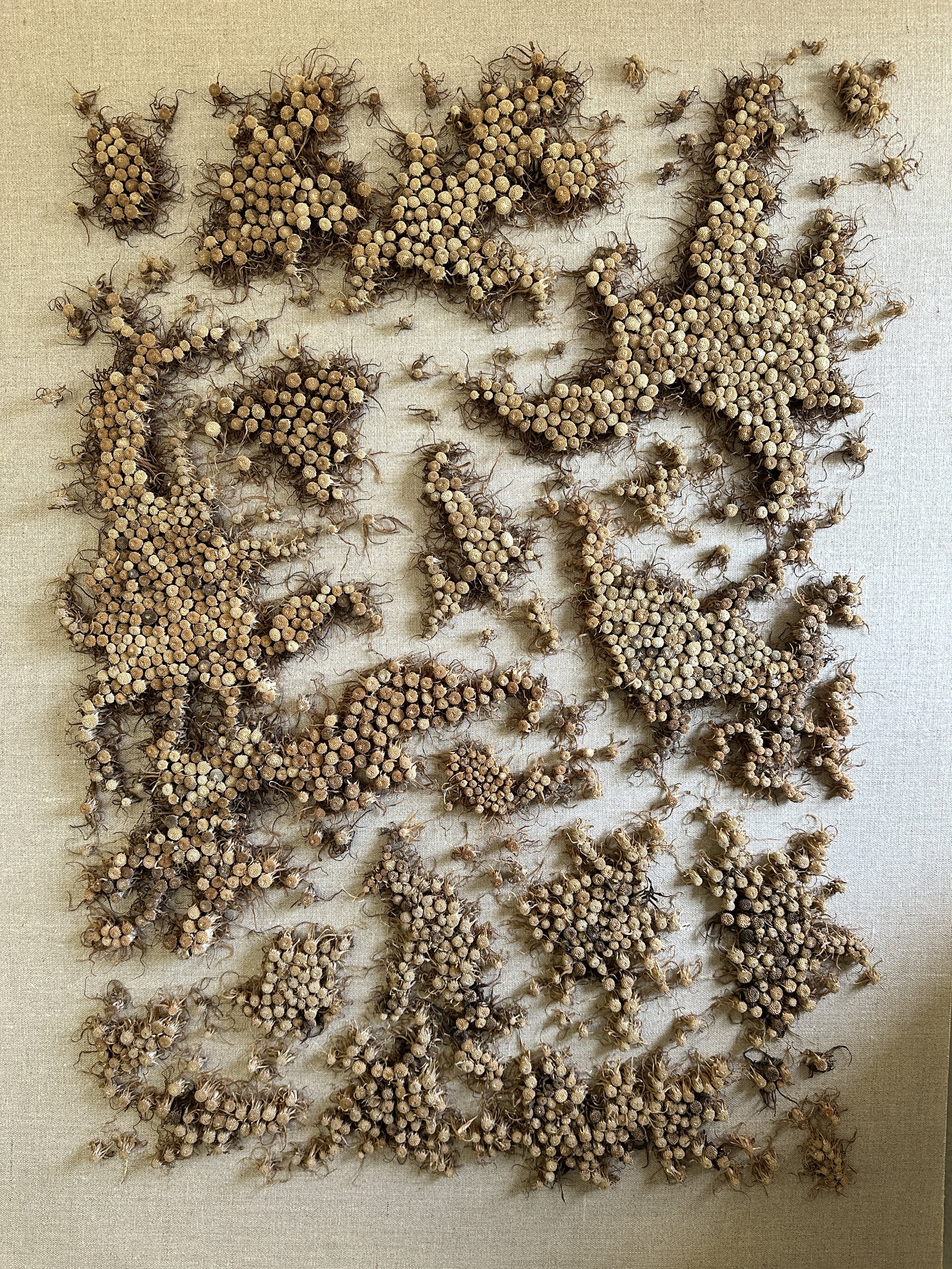
I grew up in a small Oregon town called Trail, where my family home rests among fresh water springs, a still lake, open hay fields, and towering pine trees. Each year when I return, I am reminded of its quiet majesty. Along the long gravel road, the fields are dotted with large, airy, dandelion-like forms that shimmer in the light. They stand tall, often unnoticed by those passing by, yet full of grace and intention.
When the wind carries their feathery seeds away, what remains is a brown button crowned with wild, twisting tendrils. The shape is intricate and full of quiet beauty. Look closer. The ordinary reveals something extraordinary.
30 x 40 in. Oyster Root on linen board
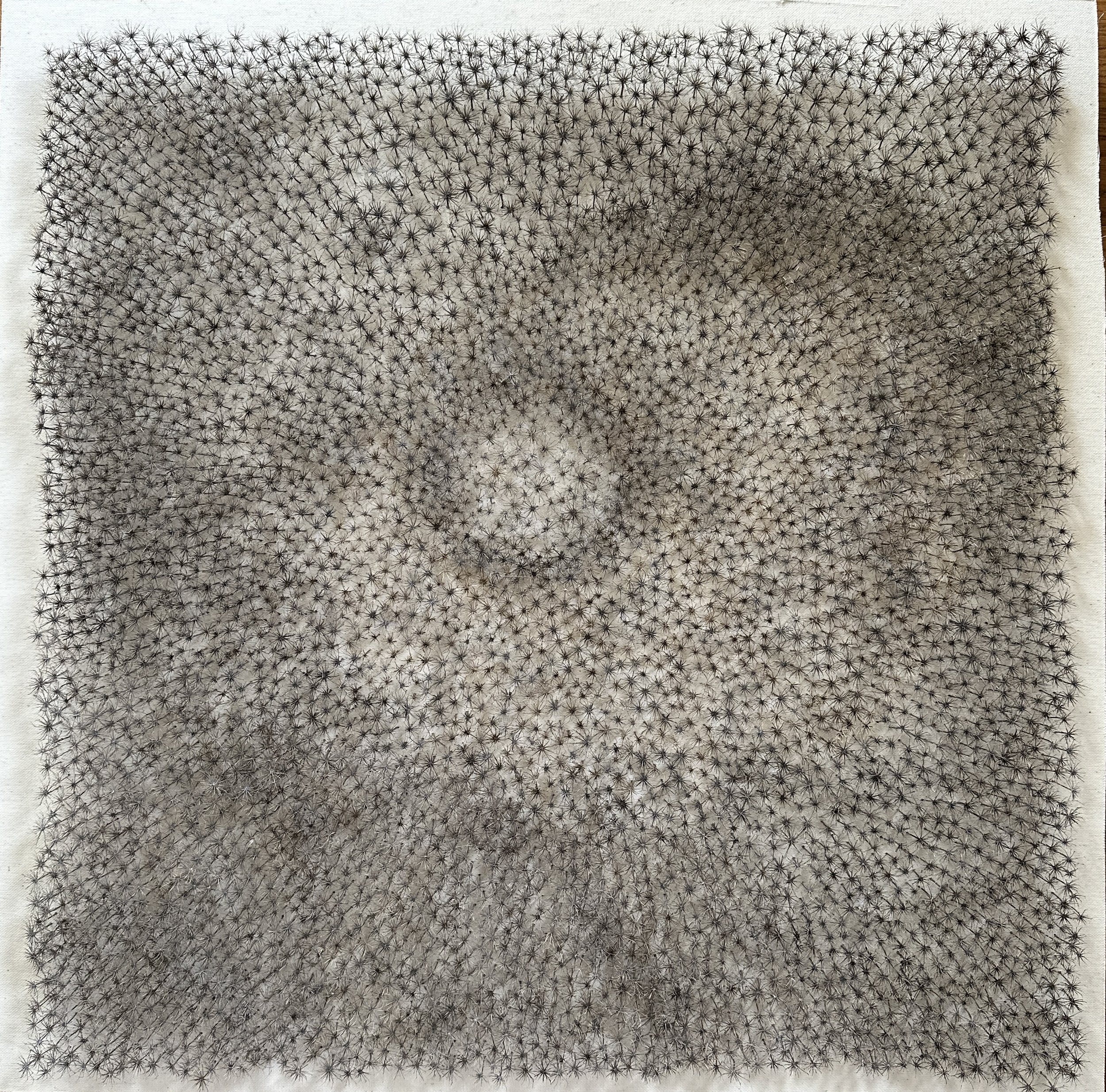
After moving to California in 2011, I became captivated by the fennel plant. Found in abundance along highways and open fields, it drew me in with its vigor, fragrance, and clusters of tiny yellow blossoms. Over time, I began to notice another, quieter beauty—the stage that comes after bloom. When the flowers fade, delicate spires remain, holding the memory of their former life.
While spending time with my family at Oyster Bay Regional Park, I gathered bags of these spent fennel umbels. Once home, I placed each stem carefully with tweezers onto a linen-lined board, arranging them by instinct. To my surprise, unplanned patterns began to emerge, each one unique and full of quiet grace, shaped by chance and by nature’s patient hand.
24 x 24 in.Fennel umbrellas on linen board
SOLD
This collection is close to my heart. Over the past few years, my family has experienced profound loss—my father, sister, grandmother, and beloved dog. Their urns sat quietly on a shelf, gathering dust. They felt heavy, static, distant. They didn’t reflect the light, joy, or essence of the souls they held.
One day, while rearranging those urns, I had an idea—one that transformed grief into creation. I realized I could weave their ashes into the clay plaster I had been working with for years, blending memory, matter, and art into something alive and beautiful again.
The first piece I made was for my Weimaraner, Pearl. We shared more than a decade of adventures—camping, hiking, wandering through Portland’s misty trails. After she passed, her urn sat untouched for years, leaving me with guilt and sadness. When I finally began her piece, I mixed soil from her favorite trail into the clay, paired it with pigments that echoed her silver-gray coat, and added surrounding flora. The result glows softly, with bits of bone shimmering against porcelain clay, like fragments of a foggy morning walk brought back to life.
Each artwork holds tangible traces of memory. My stepfather’s piece contains the small metal screws once used to mend his broken arm that had been returned with his ashes, now embedded in the plaster like quiet relics of resilience and story.
Up close, these works shimmer. Bone gleams softly against colored earth; pressed plants, sand, and bark recall the landscapes of a life. Every detail is chosen with intention, to evoke memory, to honor essence, to hold love in form.
Music is an integral part of my process. I listen to the songs my subjects loved as I work. Their rhythms shape the flow of the plaster, the palette of colors, the gestures of my hand. Through this practice, I try to capture their spirit and the energy, movement, and connection that made them who they were.
This work is about preservation, remembrance, and transformation. It’s about finding beauty in the act of letting go.
Commissions are open.
Please contact me if you’d like to explore creating a memorial artwork for your loved one.
Memorial

The first piece in the memorial collection, created in memory of my beloved Weimaraner, Pearl. Soil from our favorite Portland trail was mixed with earth pigments reflecting her soft gray coat and the surrounding flora. Within the porcelain-colored clay, the bone fragments in her ashes appear faintly, like traces of light. This work honors her spirit and the many years we spent together walking the fog-filled woods of Portland.
24 × 30 in. Clay plaster, earth pigments, cremains, charcoal on clay board.
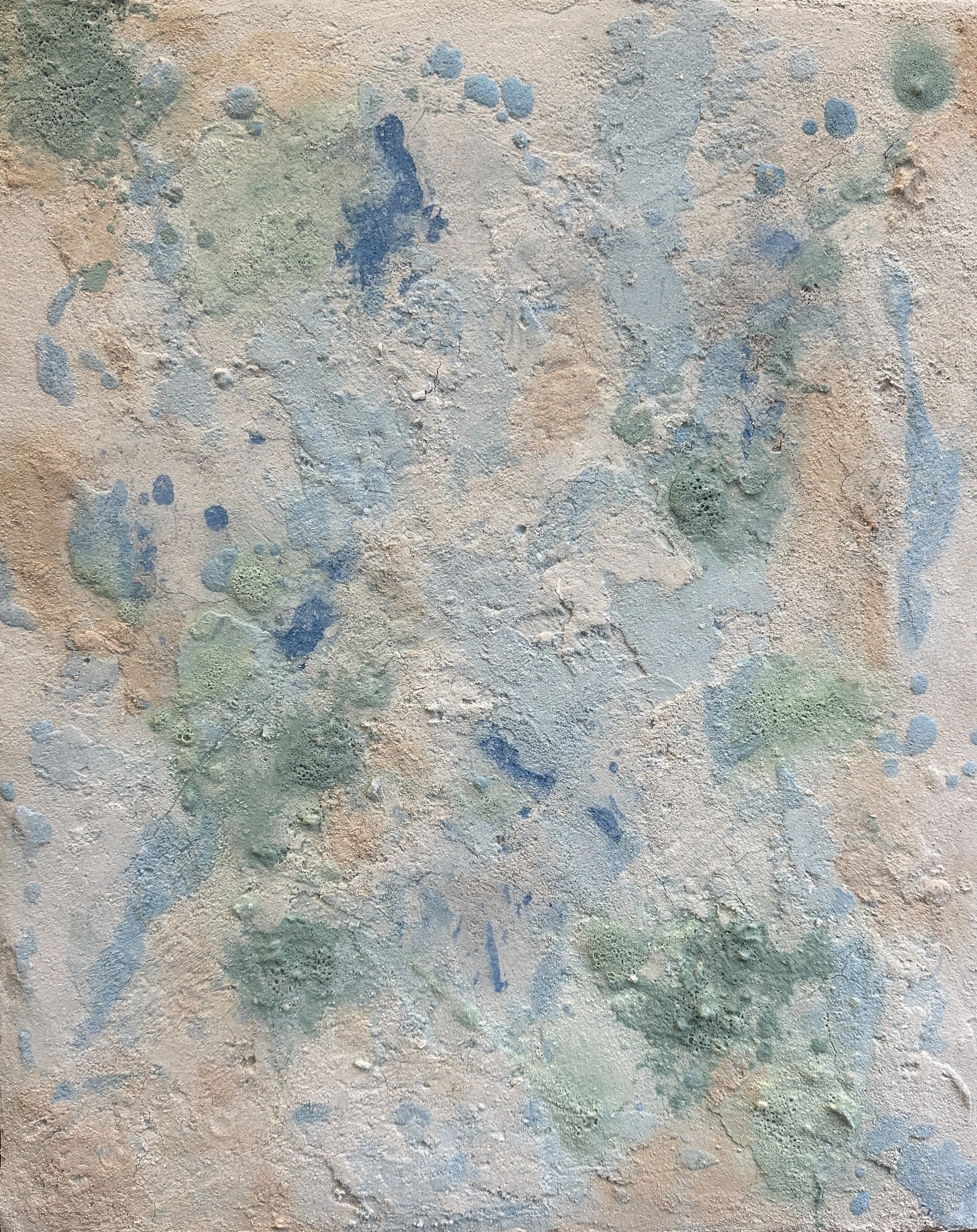
Formed in clay infused with his ashes and layered with the soft movement of watercolor, this piece honors my father. A man who loved the simple beauty of life. He was happiest in the sun-filled backyard, picking blackberries and plums, or cooling off in the blue water of the pool. He loved seafood of every kind, travel, laughter, and long summer days spent with family. He found joy in staying active by lifting weights, playing volleyball, or simply feeling his strength move through the day.
The colors flow like water and light, reflecting his warmth, vitality, and calm joy. Clay, pigment, and memory come together as a tribute to his spirit and the love he gave so freely.
16×20 in. Clay plaster, earth pigments, cremains, on clay board.

A triptych made of clay plaster and soil her hands once tended, earth gathered from the garden she loved. Each panel holds the memory of a sunset seen while traveling to reach her, when the sky bloomed in aquas, pinks, and glowing orange, her favorite colors, her warmth returning to the horizon.
Formed with my mother’s ashes, the work carries her spirit in both color and texture. Together, the three pieces create one embrace, yet they may live apart, a piece of her in each of her daughters’ homes. A quiet offering of love and remembrance, made to honor her life and the beauty she cultivated all around her.
Triptych, 3 pieces each 16x16 in. Clay plater, earth pigments, soil, cremains on clay board.

This work honors my stepfather, Bob, who came into my life when I was three. His arrival brought laughter, music, and the gentle rhythm of trees into our home. An arborist and a lover of nature, he moved through the world with kindness and curiosity. His blue eyes held the sky, and his voice filled every room with song.
If you look closely, you will find small screws embedded in the surface, fragments that once mended his broken hand. Now they rest within the clay, becoming part of the earth he cherished. This piece hums with the spirit of his humor, his stories, and the melodies he sang. We will always remember him in the rustle of leaves and the music that drifts through the trees.
18 × 24 in. Clay plaster, earth pigments, cremains, palm thatch on clay board.
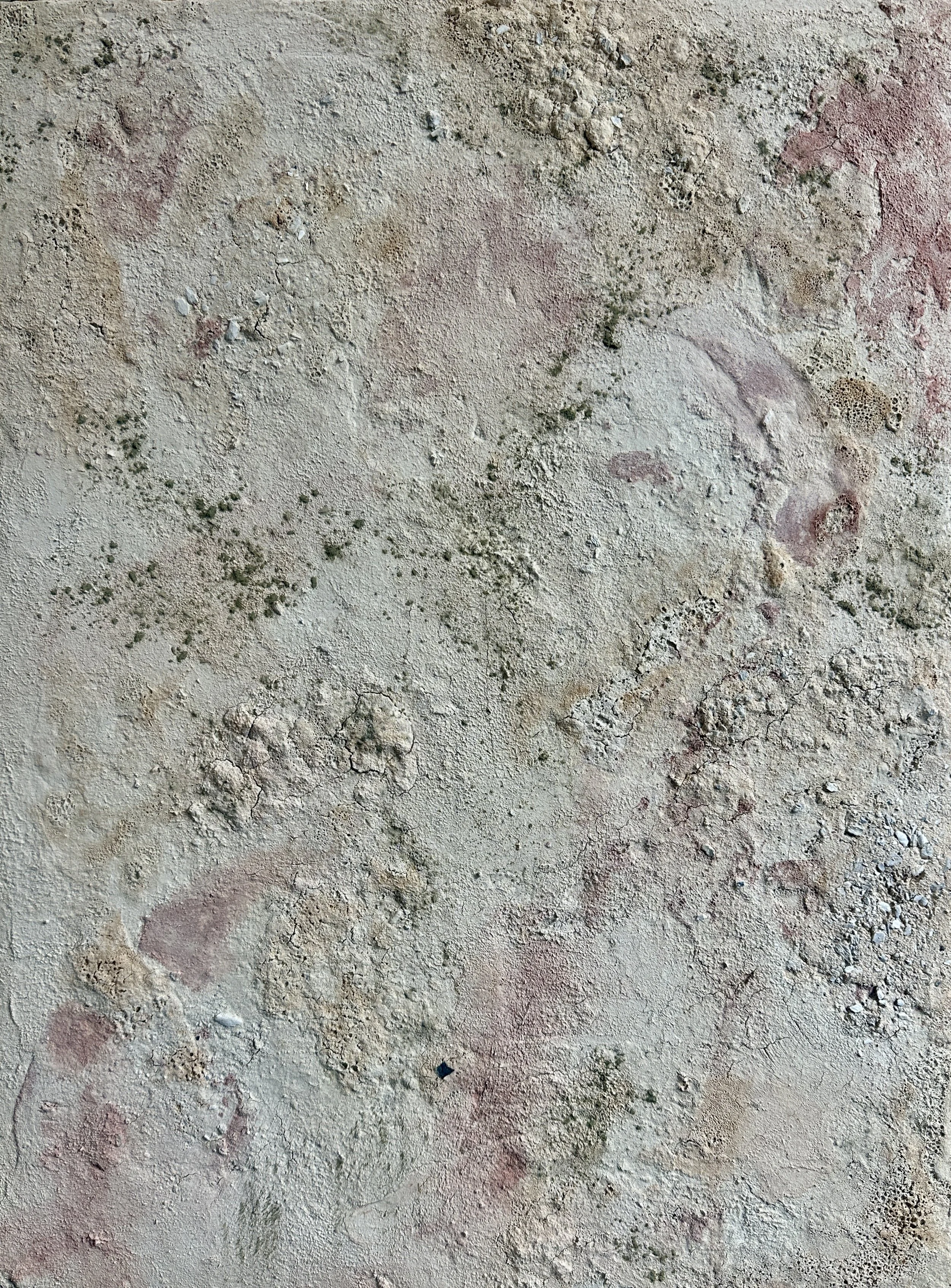
This piece honors my grandmother, Dorothy, who lived a long and lovely life of ninety-six years. Devoted to her family, she found joy in life’s simplest pleasures. She loved candy, laughter, and quiet afternoons by the river, watching her grandchildren play, ducks drift by, and deer step softly through the grass. Formed from clay plaster and her ashes, the work holds her warmth in its surface. Earth and memory merge here, layered through time. It stands as a tender act of healing and a reflection of her gentle spirit, still moving like water across the years.
18 x 24 in. Clay plaster, earth pigments, cremains, on clay board.

This piece honors our beloved sister, Sierra, taken from us too soon. She carried a smile that could light a room, a beauty that radiated from within, and a warmth that gathered people close. A devoted mother to two bright and talented boys, she filled her days with laughter, care, and a boundless love for her community.
The gentle flow of color and texture within this work mirrors her spirit, luminous, joyful, and ever-moving. In its layers, her presence lingers like sunlight on water, soft and unending. Through these pigments and the rhythm of the plaster, her joy returns to us, shimmering quietly, reminding us that love never fades. It simply changes form.
18 × 24 in. Clay plaster, earth pigments and cremains.
Vintage
Sequin
Simple yet luminous, the sequin carries a long and shimmering history. Once used for protection, as a sign of wealth, and for spiritual adornment, each one holds the memory of touch and time. The sequins I work with date to the eighteenth century. Some are silver, some brass, some carved from shell. I bring them together in new arrangements, allowing these small, forgotten treasures to shine once more. When light finds them, they respond with quiet brilliance, casting delicate reflections that shift and dance. Look closely. Within each piece, a quiet story unfolds.
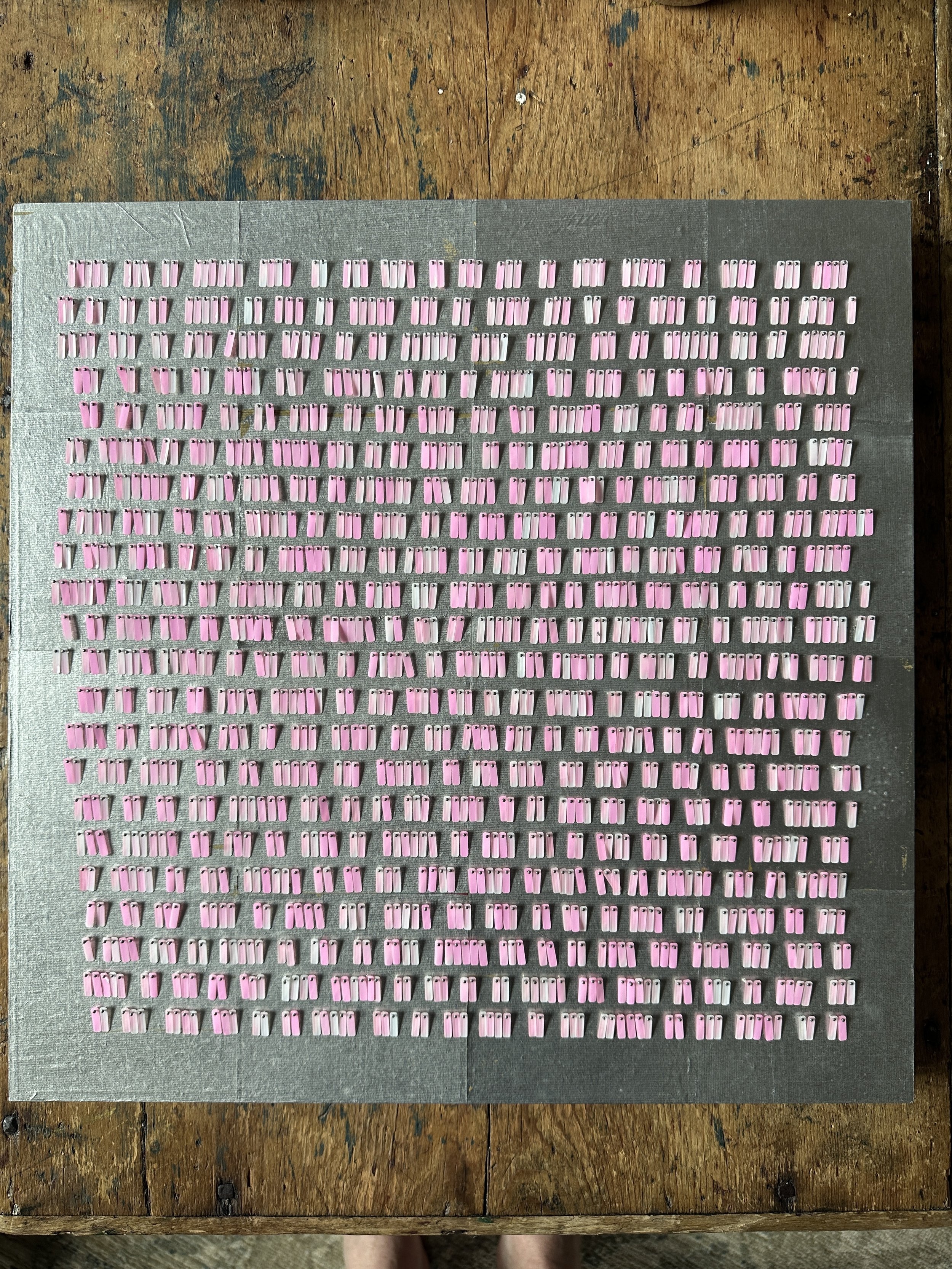
One of my favorite places in the Bay Area is Tinsel Trading Company, a trove of vintage ephemera and notions. Among its many treasures, I was drawn to the sequins sourced from the late nineteenth century. So many extraordinary things were made in that era, each with its own quiet story.
These soft pink sequins were my very first purchase. It took years to find the right way to honor them, but the result feels just right. Resting upon silver paper, they catch the light in ever-changing ways. When moved, they shimmer and dance, tiny echoes of beauty preserved, still finding their way to shine.
16” x 16” Vintage pink rectangle sequins circa 1890 pinned on Chinese silver Joss paper board.
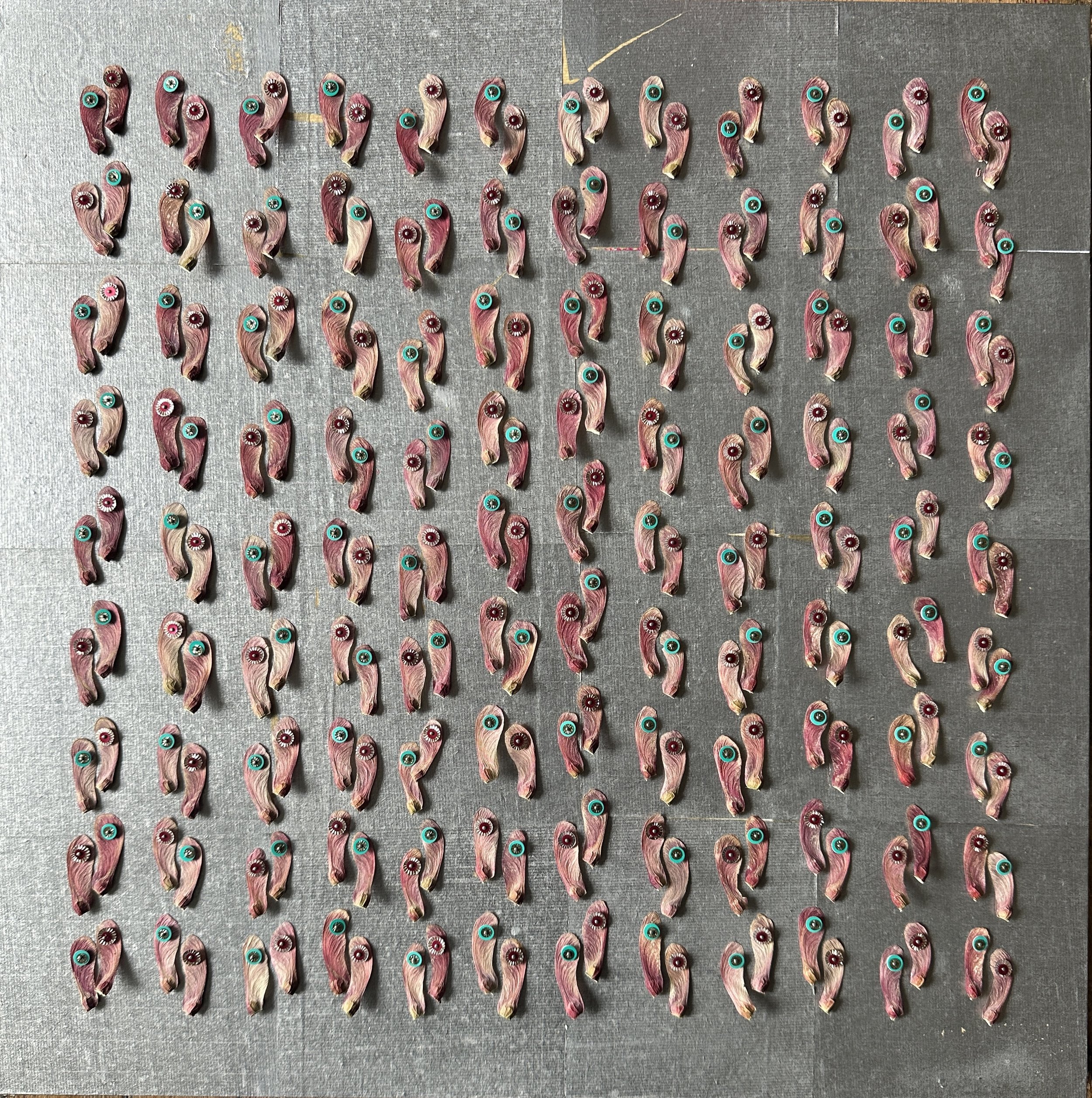
Nestled among the rhododendrons and camellias, a young Japanese maple quietly took root. Over the years it grew, revealing a delicate rhythm of change. Each spring it released a scatter of scarlet seed pods, tiny winged forms that drifted across the garden floor like footprints left by time itself. Their color and shape became a quiet muse, a reminder of nature’s gentle cycles and the beauty found in what falls, fades, and returns again.
Japanese maple seed pods on Joss paper board pinned with vintage sequins. 16”x16”
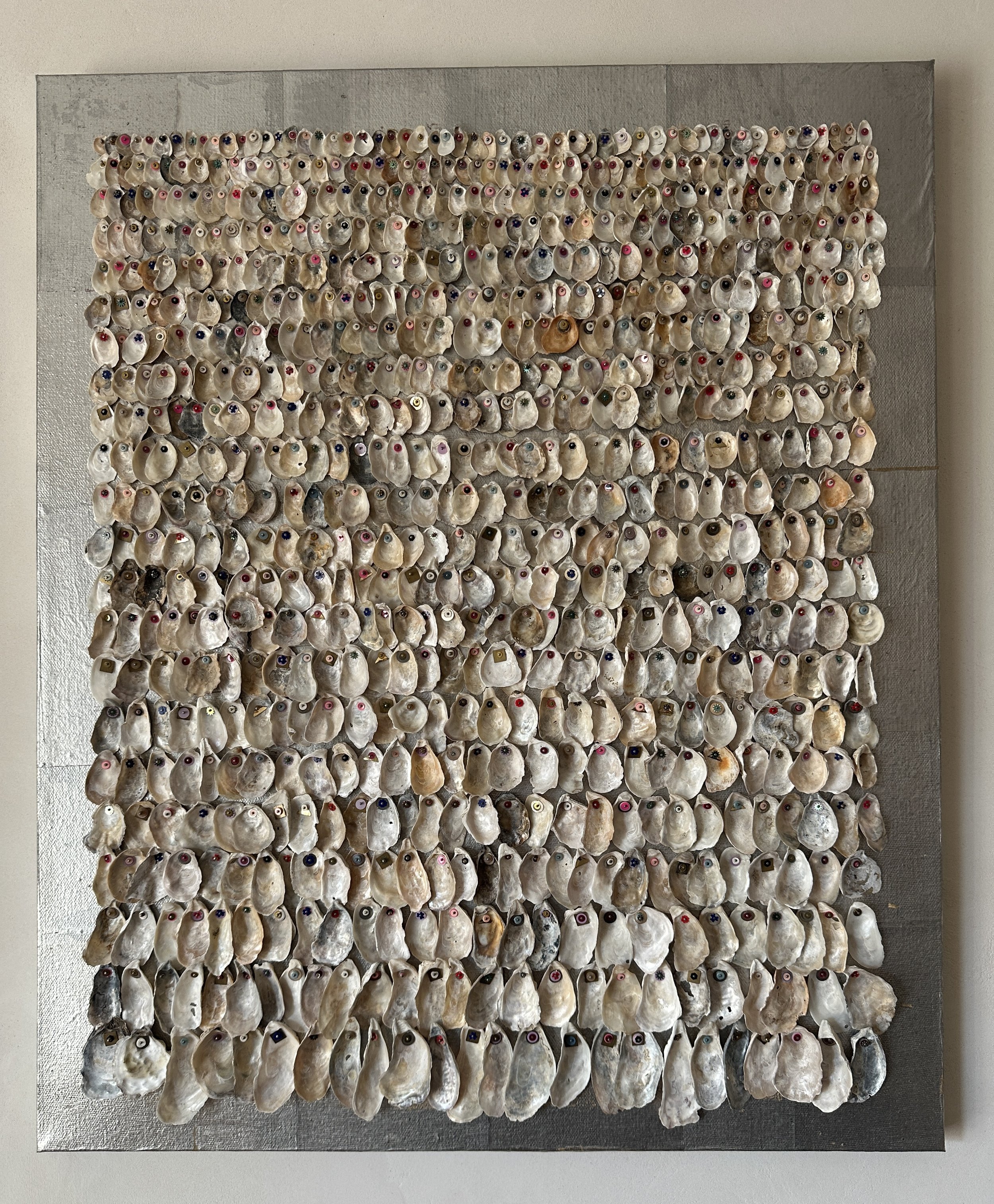
During my first pregnancy, I spent my days along the Oakland side of the Bay collecting tiny oyster shells. In time, my husband and two children joined me, each shell becoming part of our family’s quiet ritual of discovery.
Years later, this piece emerged as a celebration of simplicity and connection. Paired with 19th-century sequins and slender pins, and set upon a board of Chinese joss paper, it reflects the harmony between nature’s quiet beauty and the artful touch of the human hand.
20 x 24 in Oyster shells, vintage sequins, pins on Chinese joss paper board
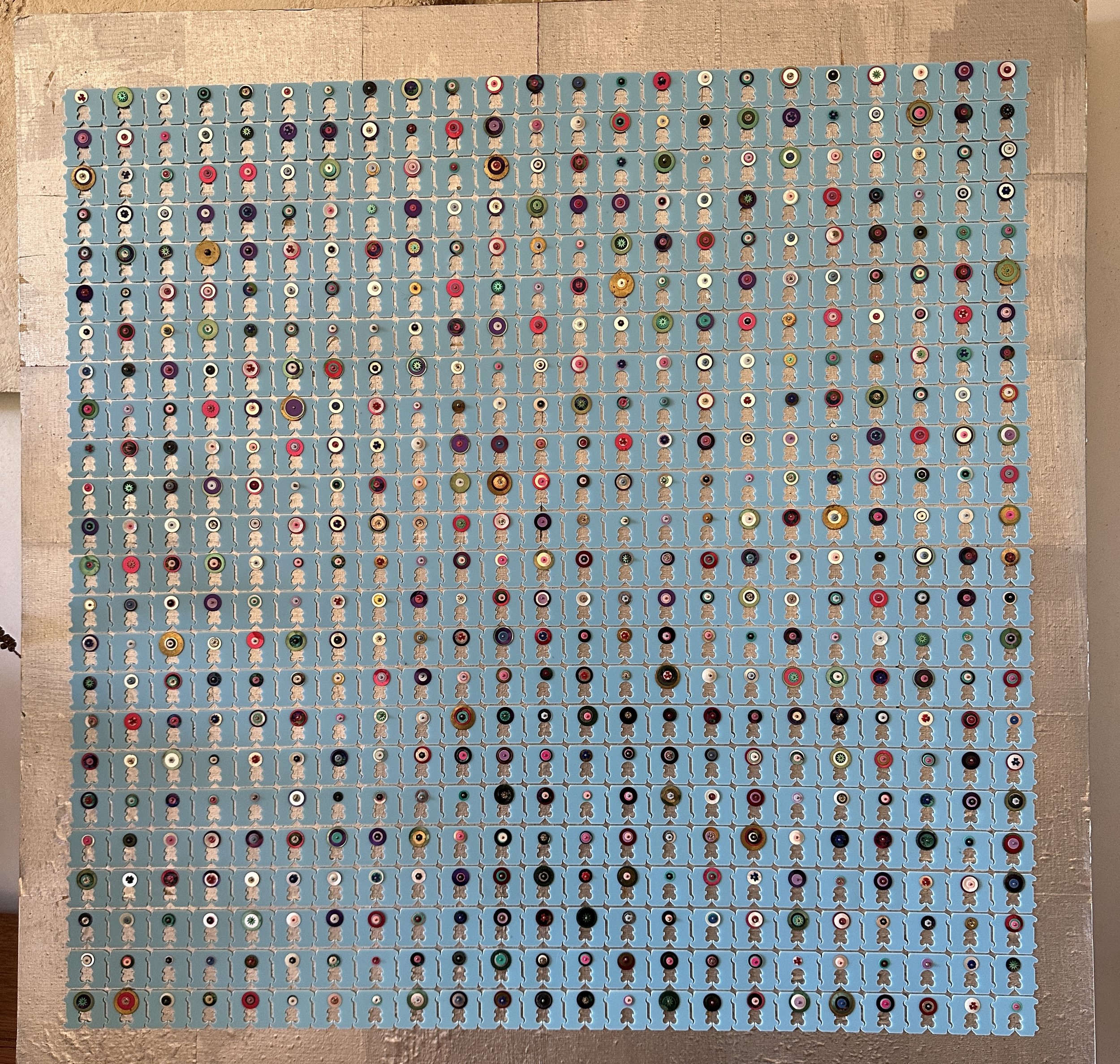
Drawn to the beauty of the everyday, I found inspiration in the humble bread tag. This small, unassuming relic of daily life has been with us since the 1950s. Its familiar shape and soft color called to be seen anew. Adorned with vintage metal sequins, the piece transforms this overlooked object into something luminous, celebrating the quiet poetry found in the simplest forms that accompany our lives.
24 × 24 in Bread tags each pinned with vintage sequins. Chinese joss paper board.
This work features the shed skins of two African Gaboon vipers, carefully embedded in soil, earth pigments, and clay plaster. The materials are intentionally chosen to echo the snakes’ native African terrain, dense, mineral rich ground where camouflage is survival and beauty is functional.
The shed forms are nestled into the surface rather than placed upon it, allowing the vipers’ patterns to emerge organically from the earth. Their markings, geometric, rhythmic, and precise, read as both natural design and ancient symbol.
Look closely. Within the translucent shed, the fang, eye, and distinctive horns of the Gaboon viper remain visible. These subtle details reward intimacy and slow viewing, revealing the tension between fragility and power, absence and presence.
This piece explores transformation, protection, and renewal, what is left behind, and what remains embedded in the land.
36”×48” Clay plaster, soil, earth pigments, Gaboon Viper snake sheds, snake fangs. Handmade bubinga frame.